Stencil Cowboy Boot Embroidery Review
As a designer who spends half my life troubleshooting stitch errors and the other half obsessing over how a finished piece feels in the hand, I approach every new embroidery file with a healthy dose of skepticism. We have all seen designs that look charming on a screen but fall apart under the needle. Today, I am putting Stencil Cowboy Boot through its paces. This is not just another clip-art vector; it is a digital stencil file designed for cutting machines and plotters, which opens up a fascinating avenue for hybrid crafting and embroidery projects.
I want to evaluate this design based on its potential for real-world application. Whether you are an Etsy seller looking for your next bestseller, a small business owner branding your boutique, or a hobbyist making personalized gifts, understanding how a stencil-based graphic translates into thread is crucial. Here is my practical breakdown of Stencil Cowboy Boot as a viable asset for your creative workflow.
First Impressions and Visual Personality
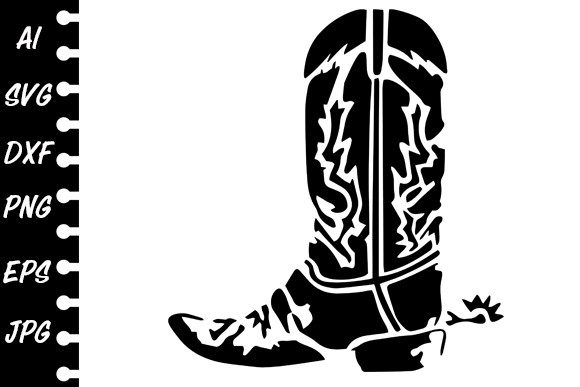
The moment I opened the file, the aesthetic was clear: bold, graphic, and unmistakably thematic. The "stencil" aspect of the title is key here. Unlike a traditional machine embroidery design that relies on complex fill stitches to create shading, this design leans into negative space and solid shapes. It creates a mood that is rugged yet clean, perfect for western-themed apparel, rustic home decor, or playful nursery items.
The shape of the boot is distinct. It has a recognizable silhouette that reads instantly from a distance. For a brand like mine, where consistency and immediate recognition matter, this is a strong point. The layout is balanced, suggesting it could work well centered on a chest pocket area of a sweatshirt or placed asymmetrically on a tote bag. It feels less like a delicate lace pattern and more like a statement piece. This visual personality naturally lends itself to products that value durability and character over subtlety.
Real-World Application Scenarios
Let’s talk about how this actually looks when stitched or cut. I imagined using Stencil Cowboy Boot for a specific client project: a set of custom embroidered patches for a local rodeo team. Because the design is graphic-heavy, it would hold up exceptionally well as an embroidered patch. The bold lines mean fewer tiny details to get lost in the fabric weave.
Another scenario I tested mentally was a line of handmade tote bag design accessories. If you use this as a stencil for appliqué, you can layer different colored fabrics to create depth without needing a massive number of thread changes. Imagine a denim base with a tan leather-look appliqué for the boot body, highlighted with a contrasting satin stitch outline. This technique elevates the product from a simple print to a high-value handmade product that justifies a higher price point on platforms like Etsy.
It also shines in the realm of custom apparel. A heavyweight cotton sweatshirt is the ideal canvas. The graphic nature of the design ensures that even if the wearer washes the garment frequently, the integrity of the image remains sharp. For small shop product owners, this versatility is gold. You can adapt the same core graphic for holiday embroidery by adding red accents, or keep it neutral for year-round sales. It fits seamlessly into categories ranging from aprons for the home cook to decorative pillow covers for a farmhouse-style living room.
Where Caution Is Required
No design is flawless, and Stencil Cowboy Boot has specific constraints that designers must respect. First, consider the hoop size. While stencils are often scalable, stitching them too small can result in a muddy mess. If you attempt to digitize this for a very small hoop size, such as one used for baby socks or tiny hats, you risk losing the definition of the boot’s heel and toe. Always test at the final production size before committing to bulk orders.
Fabric choice is equally critical. Stencil designs rely on clean edges. If you place this on a highly textured fabric like heavy bouclé or a loose-weave burlap, the stabilizer might not hold the fabric flat enough to produce crisp lines. Similarly, stretchy fabrics like thin jersey knits require a robust stabilizer strategy. Without proper support, the tension of the threads could pucker the fabric, ruining the professional finish. Dark fabrics can also pose a challenge if you are using light-colored threads, as the contrast may not be sufficient unless you use a backing or a specific underlay stitch.
Furthermore, avoid placing this design on curved surfaces like caps unless you have significant experience with multi-hoop digitizing. The straight lines of a stencil can distort awkwardly around the curve of a baseball cap brim or crown. It is better suited for flat surfaces like kitchen towels, tea towels, or the front panel of a hoodie.
Impact on Brand and Customer Trust
In the world of craft business and Etsy seller markets, presentation is everything. A well-executed Stencil Cowboy Boot design signals professionalism. When a customer sees a clean, intentional graphic on a finished product, they perceive higher quality than they would with a sloppy, overly dense stitch pattern. This design helps build brand consistency because it is unique enough to stand out but familiar enough to appeal to a broad audience interested in western or rustic aesthetics.
For commercial embroidery projects, the simplicity of the design reduces production time. Fewer color changes and simpler stitch types mean faster turnaround times for your clients. This efficiency directly impacts your bottom line. Additionally, the design’s clarity makes it excellent for printable mockup creation. You can easily visualize how the final item will look in marketing materials, helping to drive buyer engagement before the physical product is even made.
Practical Designer Notes for Implementation
If you decide to incorporate Stencil Cowboy Boot into your workflow, follow these steps to ensure success:
- Test on Scrap Fabric: Never go straight to the final garment. Stitch the design on a scrap piece of the exact fabric you plan to use. This reveals how the material reacts to the stabilizer and thread tension.
- Check Thread Color Contrast: Since this is a stencil, the background shows through. Ensure your thread color contrasts sufficiently with the fabric color. A black boot on navy blue might disappear; a white boot on cream might lack definition.
- Review Stitch Density: Even though it is a stencil, check the stitch density of any outlines or fills. Too much density can make the design stiff and uncomfortable, especially on baby embroidery items.
- Use Proper Stabilizer: For woven fabrics, a tear-away stabilizer might suffice. For knits or stretchy materials, a cut-away stabilizer is non-negotiable to prevent distortion during washing.
- Inspect Small Details: Zoom in on the digital file. Are there any tiny specks or unintended gaps? Clean up the vector file if necessary before converting it to an embroidery format.
- Confirm Licensing: Before selling personalized gifts or digital product previews, verify the commercial use rights of the file. Some stencil files are for personal use only, while others allow full commercial exploitation.
Ultimately, Stencil Cowboy Boot is a versatile tool for the modern maker. It bridges the gap between digital cutting and traditional stitching, offering a fresh take on classic themes. By respecting its limitations and leveraging its bold visual style, you can create design assets that resonate with customers and elevate your embroidery project portfolio.